
Last Updated: 30 May 2026
Tipping Used To Drive Me Mad
For my first four years living in Egypt, I simply couldn’t understand tipping. Why couldn’t people just tell me what a service cost and be done with it? Why was I expected to guess what was appropriate?
And worst of all, what if I got it wrong?
Then my son Jon came to Egypt on holiday.
He had never experienced a tipping culture like Egypt’s before, but he saw it completely differently. The first person he tipped received more than was expected. The man’s face lit up with surprise and genuine delight.
That moment changed how Jon approached tipping for the rest of his trip.
It wasn’t that he was wealthy. Back then, the difference between the Irish economy and the Egyptian economy was enormous. What felt like a small amount to him could make a real difference here, and he felt so good himself every time he saw he was making the day better for someone else. It would be hard to say who was benefiting more from the tips – Jon or the people he was tipping!
Watching that interaction made me realise something.
The problem wasn’t tipping.
The problem was that I was viewing it as a financial transaction for services already paid for, while Egyptians viewed it as an expression of personal appreciation.
After more than twenty years living in Egypt and answering this question thousands of times, this blog post attempts to provide the simplest explanation I can give.
I’ve watched tipping confuse more visitors than almost any other aspect of travelling in Egypt, which is why I finally decided to explain it properly.
The Short Version
If you don’t want to read the entire article, here are the key points:
- Tipping is normal throughout Egypt and Egyptians tip each other too.
- A tip is seen as appreciation for service and, at the end of the day, it is an integral part of people’s income.
- Foreign notes are fine. Foreign coins are not.
- If someone genuinely improves your experience, acknowledge it.
- The figures you still see quoted on most websites are often years out of date.
The best honest advice on tipping in Egypt can be summed up in 2 sentences:
- A US$5 tip in Egypt still matters, but it no longer stretches as far as many visitors imagine.
- Swap places with the person providing the service. What would feel like a genuine expression of appreciation to you? Answer this question and you don’t need to ask “how much to tip?” any more.
Table of Contents
- Why Tipping Confuses So Many Visitors
- The Difference Between Tipping and Baksheesh
- The One Secret Most Tourists Never Learn
- Understanding Egypt’s Culture and Today’s Economy
- Which Currency Should You Use?
- How To Hand Over A Tip
- Situations Where Tipping Is Not Necessary
- Frequently Asked Questions
- Typical Starting Points Used By Many Travellers
Why Tipping Confuses So Many Visitors
Most visitors arrive already frustrated because they have received completely contradictory advice online.
One website says tip this amount. Another says tip half that amount.
Someone in a Facebook group insists tipping is unnecessary. Someone else says everyone expects money all the time.
By the time people arrive, they are already exhausted by the subject. The reality is much simpler.
Tipping is deeply woven into everyday Egyptian life. Egyptians tip other Egyptians. It is not something invented for tourists.
A tip is generally understood as a gesture of appreciation for a service received. Once you understand that, everything becomes easier.
The Difference Between Tipping and Baksheesh
It’s important to distinguish between tipping and baksheesh.
- Tipping: This is for services rendered. You give a tip to show your appreciation for good service.
- Baksheesh: Traditionally refers to money given without a service being rendered, or loosely requested.
The One Secret Most Tourists Never Learn
If you know someone will be looking after you for several hours or several days, a tip at the beginning often produces better service than a tip at the end.
A guide, driver, concierge, housekeeper or waiter who immediately knows their effort is appreciated will often go above and beyond. A good tip passed in the first minutes of meeting or sitting down is a quiet way of stating the level of service you require.
You are not buying better treatment.
You are creating goodwill from the very beginning.
Egyptians understand this instinctively.
Understanding Egypt’s Culture and Today’s Economy
Tipping is culturally embedded and expected by Egyptians from Egyptians.
- Egyptians tip with gratitude and grace.
- Tipping signals whether service met expectations.
- The economy has changed significantly due to inflation and currency devaluation.
Which Currency Should You Use?
Any major currency note is acceptable, but Egyptian pounds are often more convenient for the recipient. Foreign coins should be avoided.
How To Hand Over A Tip
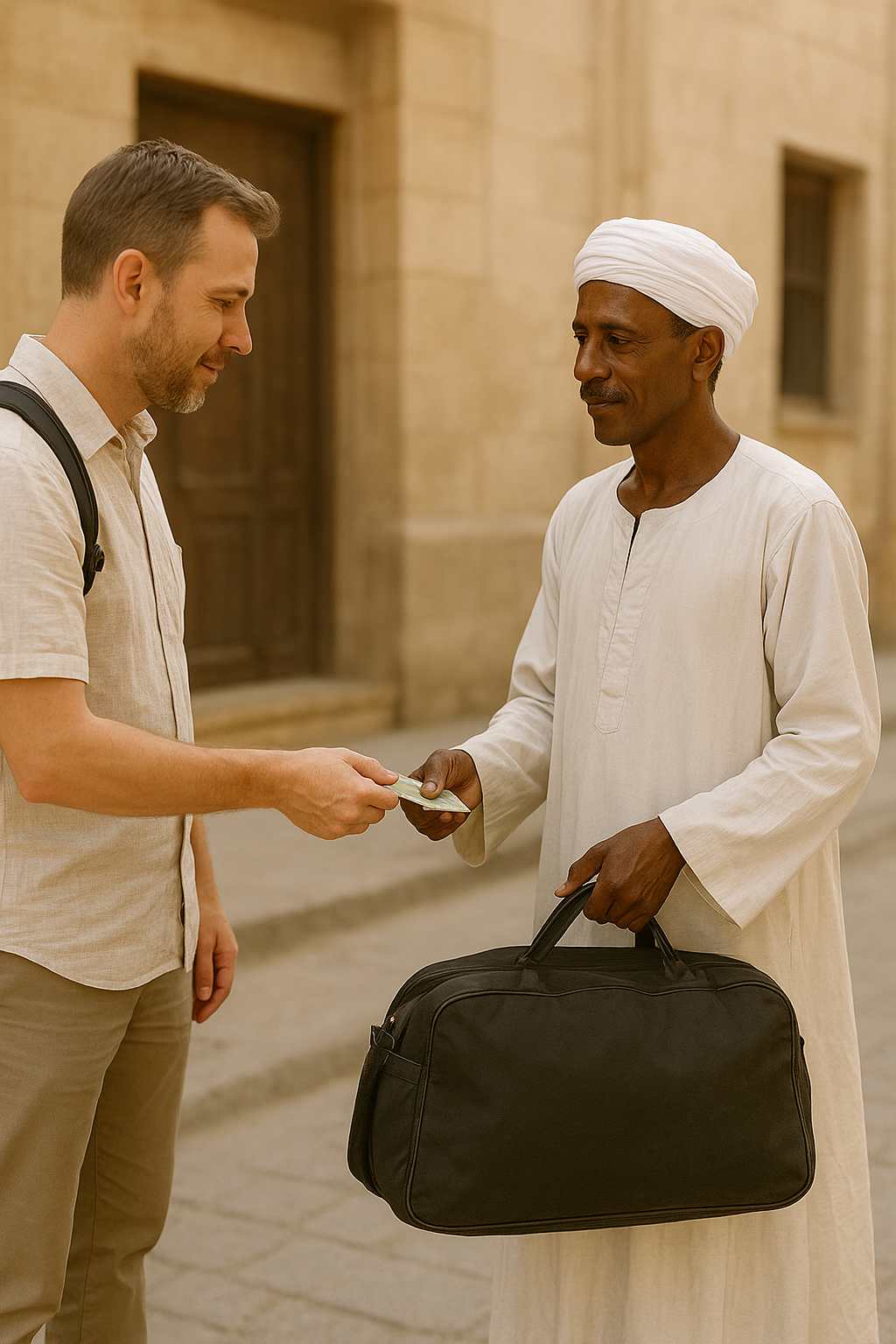
In all situations except restaurant payments, it’s customary to discreetly fold the tip and pass it during a handshake with a smile.
It is not normal to present tips like a formal payment. This is considered rude.
If someone declines at first, it is a gesture politeness or an acknowledgement of their feelings of friendship rather than refusal. In this instance you should insist. You will see this interaction many times between Egyptians.
Asking someone how much to tip another person can feel uncomfortable for locals. Guides are used to it on the first day but not repeatedly. These days travelers are expected to know.
Situations Where Tipping Is Not Necessary
- Police or security personnel.
- Temple guardians offering “special access”.
- Tomb guardians offering photography permissions.
- Street food vendors (hygiene caution advised).
- Airport staff unless porters handling luggage.
Frequently Asked Questions
Is tipping compulsory in Egypt?
No, but it is expected almost everywhere a service is provided.
What happens if I don’t tip?
Nothing dramatic, but the person may assume you were unhappy with the service.
Why don’t tour companies include tipping in the price?
- Tipping is part of the culture.
- It ensures direct recognition of service.
- It allows flexibility based on experience.
- To include it would, most likely, ultimately damage the level of service across the tourism industry.
Should I tip in Egyptian pounds or foreign currency?
Any major currency note is acceptable, but Egyptian pounds are often easiest for recipients of tips less than US$10.
How much should I budget for tips?
For a 10-night stay, around $250 is a reasonable guide but it really depends on how many days of touring you do. Your guide and driver are the recipients of the largest tips. The guide is professional, spent at least 4 years training initially and is with you maybe 5 – 8 hours a day. Second is the driver and when you see Egyptian traffic you will appreciate his driving skills even more.
Typical Starting Points Used By Many Travelers
| Who | Amount | When |
|---|---|---|
| Tour Guide | US$25+ per day | End of tour if multi-day |
| Driver | US$10+ per day | End of day |
| Hotel Porter | US$1 or 50 LE per bag | When bags are delivered |
| Housekeeping | US$5 or 200 LE per day | Daily |
| Nile Cruise | US$20 per couple per night | End of cruise (tip box) |
| Waiter | Some say 10% – I don’t agree | After meal. See Final Thought |
| Felucca Captain | US$5–$10 | End of sail |
| Toilet Attendant | 20–50 LE | When using facilities |
| Helpful Hotel Staff | Use above as guideline | When service is provided |
Final Thought
Using percentages to calculate tips is not always helpful in Egypt.
- A 10% tip on a high-end meal may still feel low for the level of service provided.
- In local restaurants, percentages can undervalue the work involved.
- Service charges do not always reach staff directly.
Egyptians are generally not looking for perfection. They are looking for recognition.
A smile. A thank you. A note of appreciation in the guide’s envelope. An acknowledgement that their effort mattered.
If someone has genuinely improved your experience, that recognition is remembered long after the money itself has been spent.
You will find all my travel tips here
I hope you enjoy your stay in Egypt.
Last updated on 03/06/2026 by Marie Vaughan