
Last updated: May 8, 2026
Have you ever asked yourself: “What would I have built if no one told me the rules first?”
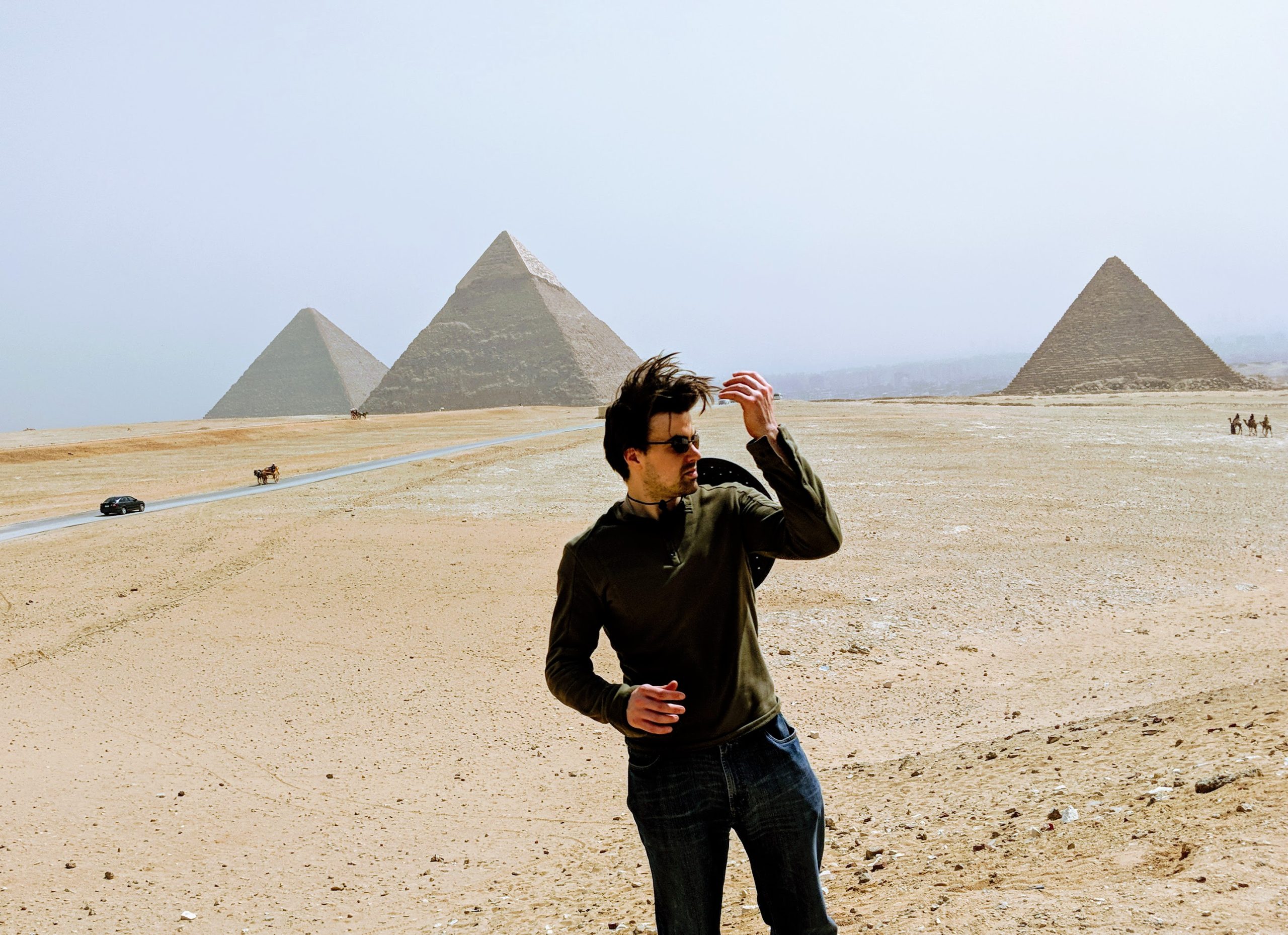
I’m Jeremiah Karpowicz, and while I’ve asked that question about monuments and landmarks from across the globe, I found the most definitive answers in Egypt. Those answers were created thousands of years ago but they’re still standing today, showcasing how ambition and a sense of wonder can resonate across the eras. I’ll be part of a journey that explores how this mindset and approach can reshape your perspective in the present to meaningfully redefine your future.
More about me at the end, but here’s a look at our journey:
Tour – Architecting the Impossible – July 27 to August 6, 2027
PRIVATE ACCESS
Three private visits without the crowds are included:
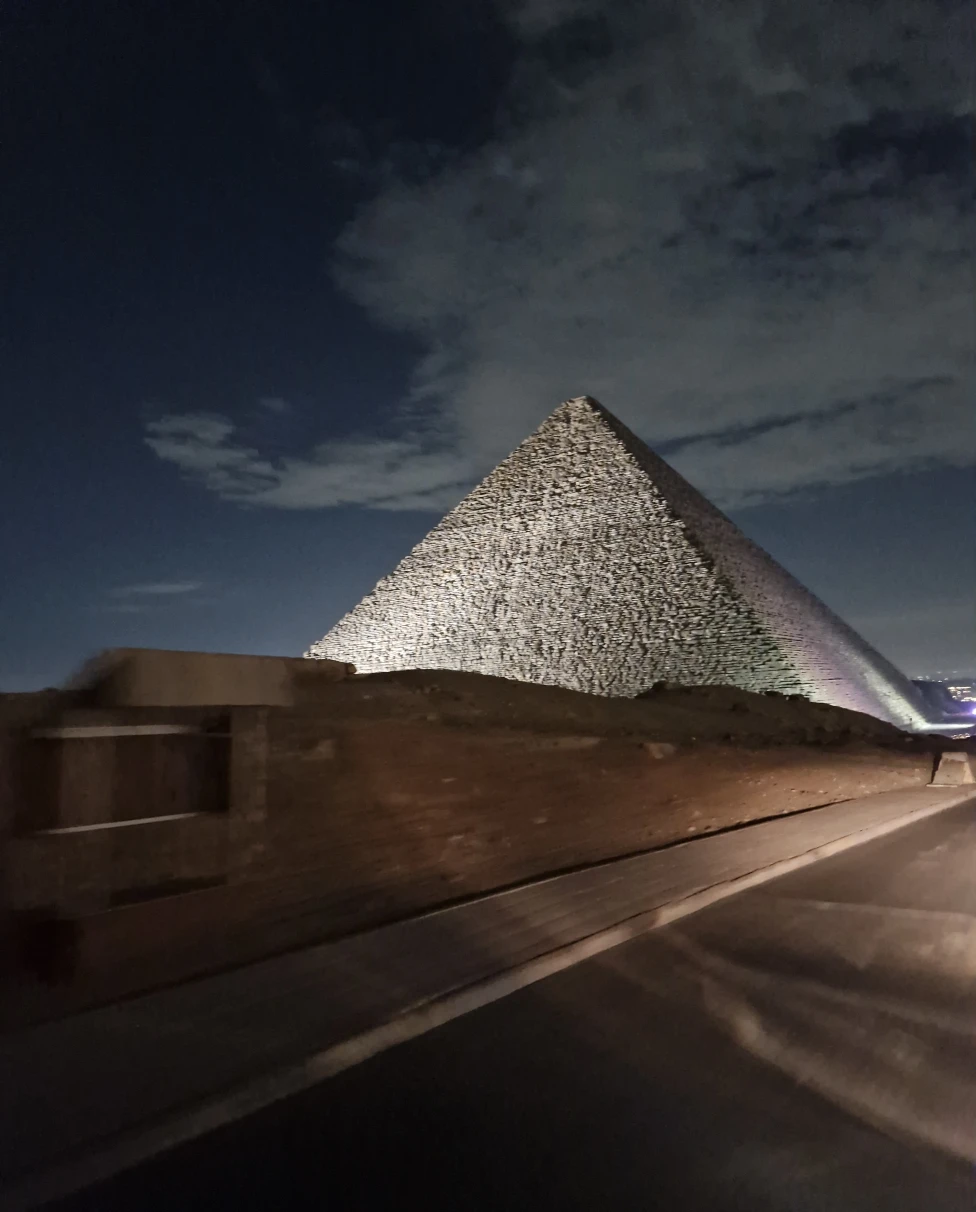
- The Great Pyramid of Giza – 2 hours
- The Sphinx enclosure – 1 hour
- The Osirion at Abydos – 2 hours
Why These Structures Shouldn’t Exist (But Do)
The Great Pyramids of Egypt have captured the imagination of people across the world for thousands of years, and for good reason. These structures defy belief in their scale and scope, standing as a testament to a civilization that only had rudimentary tools and machinery but still managed to construct what are arguably the most impressive structures in human history.
A Legacy That Spans Millennia
Their ambition would compel the creation of other seemingly impossible structures and monuments across multiple eras of ancient Egypt, including the Temples of Ramses II and Nefertari at Abu Simbel, the Valley of the Kings, and the Karnak and Luxor Temples. That influence extends to the modern day as well, with the creation of the Grand Egyptian Museum (GEM), recognised as one of the best museums in the world.
What the Stones Actually Teach Us
While the physical endurance of these monuments is staggering, their true significance is connected to what they represent about the human spirit. They’re literal proof of what’s possible when limitations are ignored and ambition is pushed to its absolute limit. They serve as a permanent lesson in thinking differently, showing us exactly what can happen when someone has the fortitude to ask “what if?” or “why not?”
Who This Journey Is For
This journey is designed for those who seek to understand the triumph of impossibility and the pursuit of true immortality. The legacy of the Egyptians teaches us that creating something of lasting value is about more than utility or aesthetics — it is instead about embracing a vision so big that it requires you to truly think differently. How would doing so impact the way you live the rest of your life?
An Invitation to Build for Eternity
This trip is an invitation to make the impossible possible by ignoring perceived constraints and leaning into your ambition. We’ll explore the long-lasting implications of choosing the difficult path and recognise that our greatest work begins the moment we stop building for today and start building for eternity. By the end of this journey, you’ll have a true understanding of the wonders of Egypt — and the baseline to construct a legacy of your own.
Below is a day-by-day breakdown of the sights and insights you’ll experience each day. Full logistics regarding accommodation, transfers, etc. are on this page.
Day 1 – July 27
Arrive in Cairo, where we will meet you inside the airport and fast-track you through immigration and customs, then transfer to our hotel. This evening we will level-set and establish a framework for the way to be thinking about and approaching the trip.
Day 2 – July 28
We’ll spend the day on the Giza Plateau, home to the Pyramids and the Great Sphinx, with a visit to the Grand Egyptian Museum — conceived by a team of Irish architects and one of the latest marvels in engineering.
The Gt. Pyramid: the sheer mass, the precision of the stonework, the alignment with celestial bodies. The impossibility is in the logistics — quarrying, transporting, and assembling 2.3 million blocks with near-perfect accuracy. If ancient civilizations achieved so much with so little, what more could we be capable of today? We’ll explore these profound questions while experiencing the majesty of the world’s most iconic wonders.
Today we will visit the Great Pyramid at night and the Sphinx enclosure in daylight.
Sphinx: carved from a single limestone knoll. No expansion joints. No rebar. 4,500 years of earthquakes. No differential settlement.
Great Pyramid:
- 2.3 million blocks. Average 2.5 tons. Granite beams in King’s Chamber: 80 tons each, from Aswan, 800 km south.
- Alignment to true north: off by 0.05 degrees. Modern airport runways allow 0.1.
- Base corners: 90° within 1/50th of a degree.
- Remaining casing stones: polished Tura limestone, flat to 1/100th of an inch.
- Bedrock beneath the Pyramid: levelled to ±2 cm over 13 acres.
They built for eternity, not completion. Centuries passed between dynasties. No architect signed their name. The project was the offering.
In daylight on the plateau we have private access into the Sphinx enclosure — between the paws, at ground level, not on the distant viewing platform. Later, after dark, inside the Great Pyramid, alone. Through the Grand Gallery to the Queen’s Chamber, onwards and upwards to the King’s Chamber, then 150 metres underground to the subterranean chamber.

Day 3 – July 29
Our journey continues by connecting multiple eras of influence, starting at the Step Pyramid — a place where curiosity meets ambition.
- Step Pyramid: stacking one mastaba on another. A single question — what if? — broke the ceiling of human imagination. Paradigm shift in stone.
- That same question, 5,000 years later, lives in the Grand Egyptian Museum. A modern architectural echo of the same ambition.
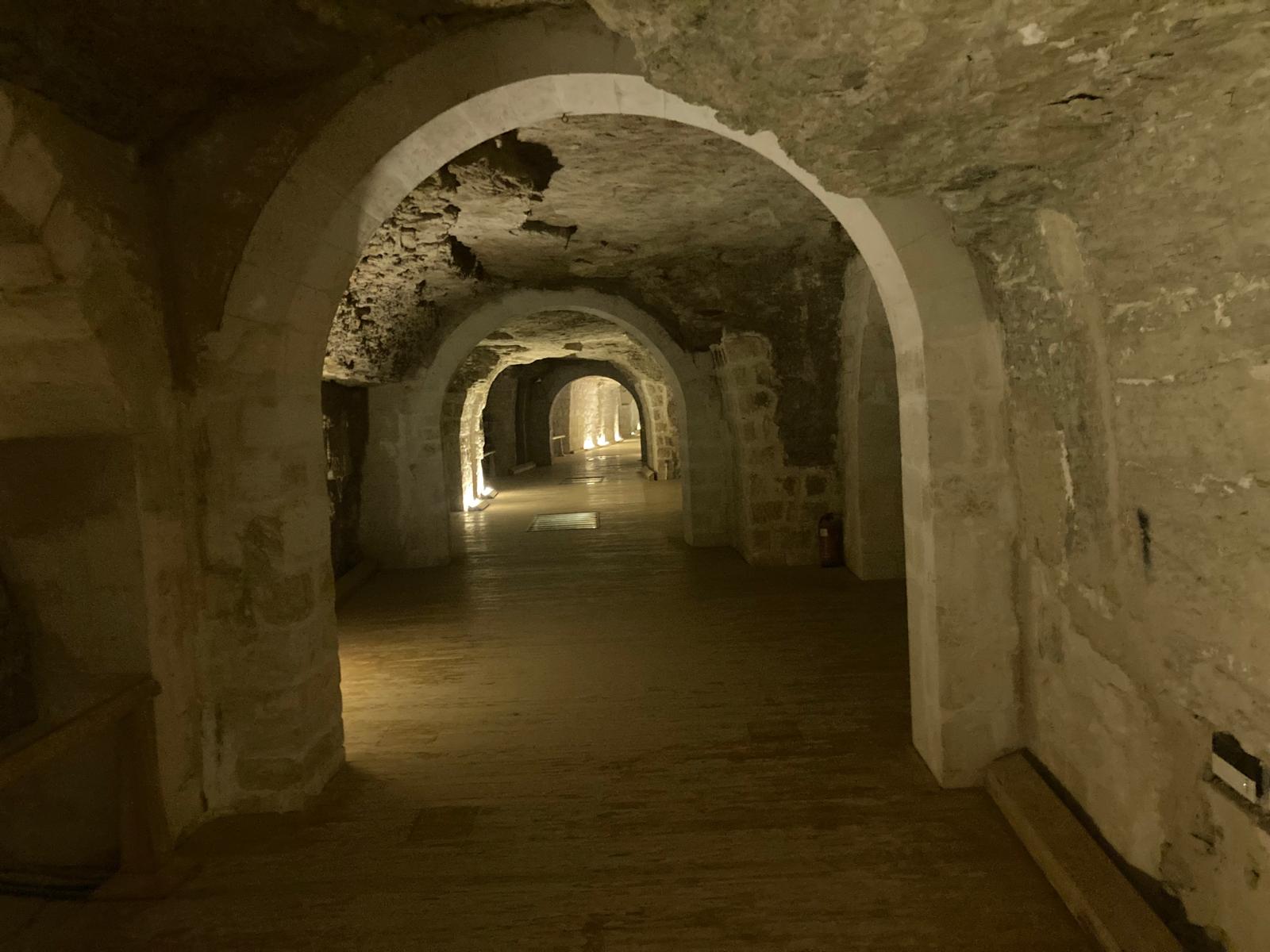
- Then the Serapeum. Unseen from above ground.
- If the technology exists that bored through solid rock leaving traces like glass, it is still hidden today.
- Even if you knew the answer to that — how did they get the 70–100 ton sarcophagi into place? No modern method has moved them. It’s been tried.
- And one place where no man can pass without instantly dropping dead. Only a tiny space remains open. Sealed and unexplored to avoid further death.
Daylight at the Step Pyramid with the group. Then below ground, alone in the Serapeum galleries. The questions will rush. No answers given. That is the point.
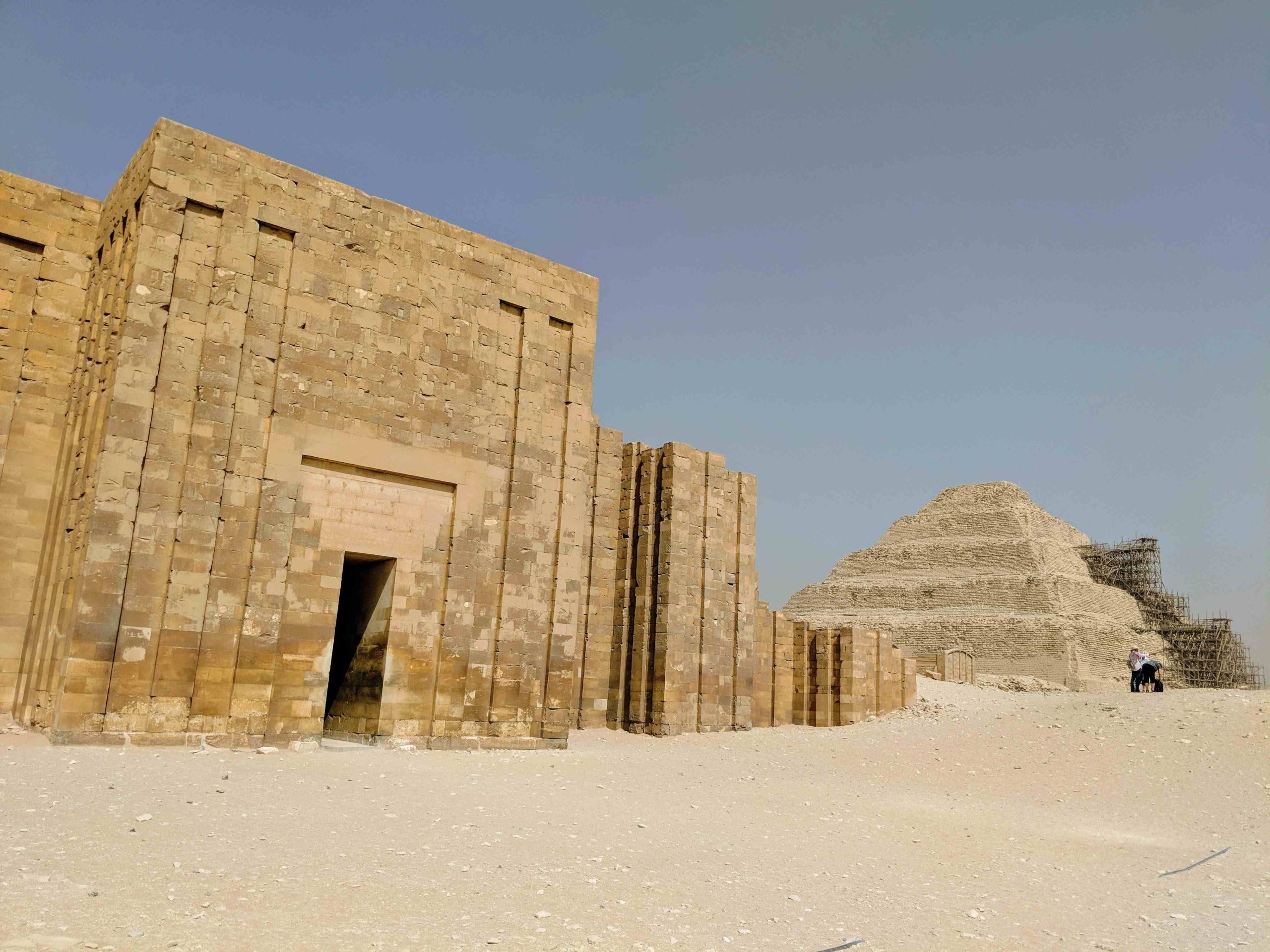
The Step Pyramid provides an ancient answer to the question of “what if?” while the Grand Egyptian Museum represents a modern one. What does each tell us about the people who asked and answered them? Or about what it means to ask and answer similar questions of ourselves?
Day 4 – July 30
Abu Simbel is a massive monument carved directly into a mountain. How was this possible without dynamite and heavy machinery? It’s just one of the questions this marvel has raised for modern audiences — with additional ones connected to a mid-20th-century relocation that transformed it into a modern wonder.
- The ancient Egyptians achieved what should be impossible. Then the modern Egyptians moved it.
- First: the original construction. Four colossal seated statues carved from the living cliff. The facade is not a facade. The mountain is the temple.
- Twice a year, sunlight penetrates 60 metres to illuminate the inner sanctuary — but never touches the god Ptah, lord of the shadow realm. Intentional. Calculated. Perfect.
- Second impossibility: UNESCO, 1960s. The rising waters of Lake Nasser would drown Abu Simbel forever.
- The world’s engineers cut the entire temple into massive blocks — up to 30 tons each — moved it uphill, and reassembled it with original alignment to 1/10th of a degree.
- Ancient precision met modern desperation. Both won.
Daylight at the relocated temple with the group, then back to our Nile Cruiser anchored at Aswan.

Day 5 – July 31
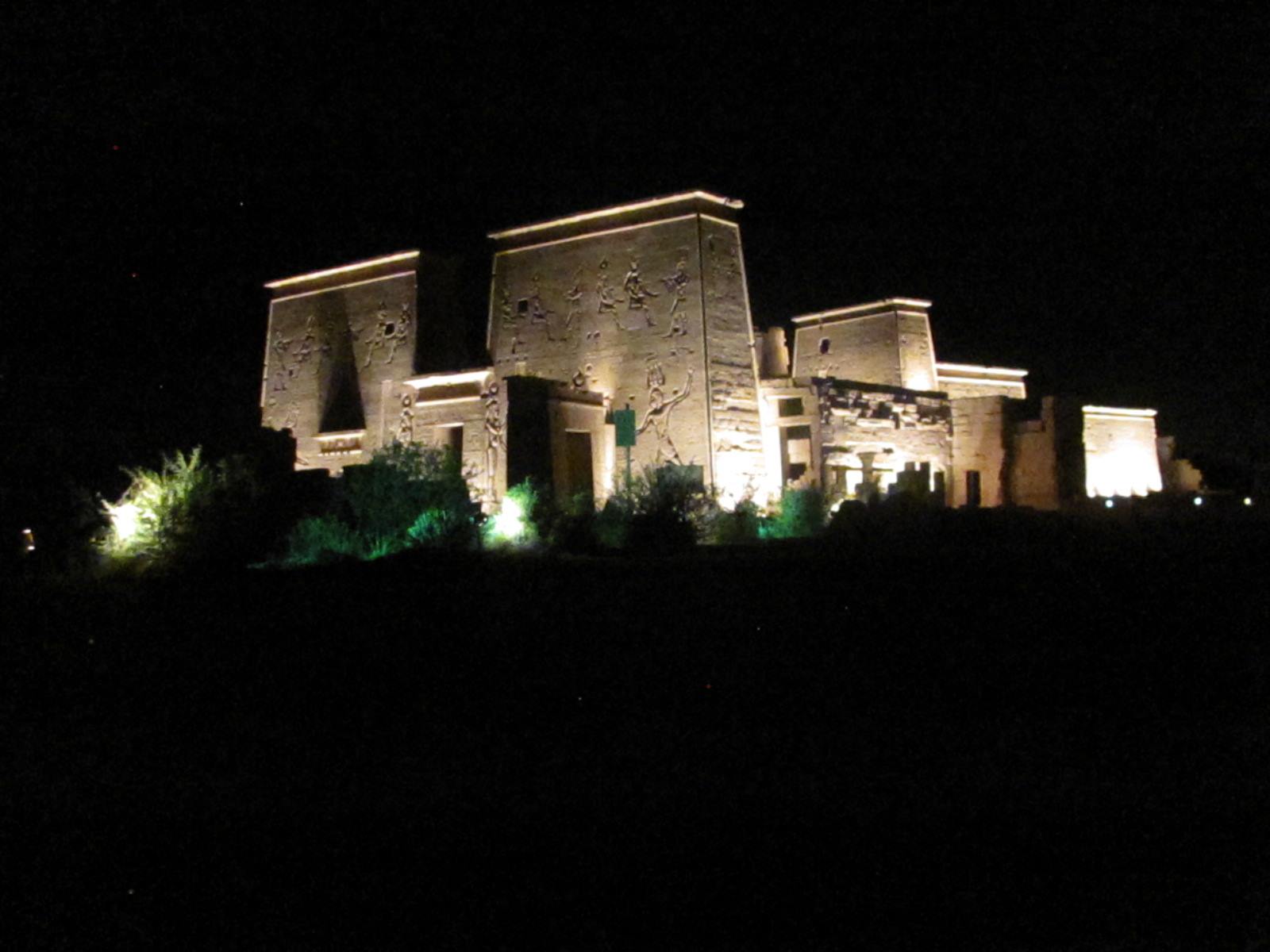
Legacy is a concept that spans eras, cultures, and civilizations, and nowhere is this more evident than at Philae Temple.
- Known as the last bastion of ancient Egyptian religion, Philae Temple holds the world’s final known hieroglyphic inscription.
- Recognised as the “Pearl of Egypt” for its blending of Egyptian tradition with Greek and Roman influences.
- A legacy that extends into the modern era — the entire temple was dismantled into 40,000 blocks and moved, piece by piece, to Agilkia Island.
- How else does Philae prove that even when the world changes, ambition can ensure that greatness survives in unexpected ways?
Day 6 – August 1
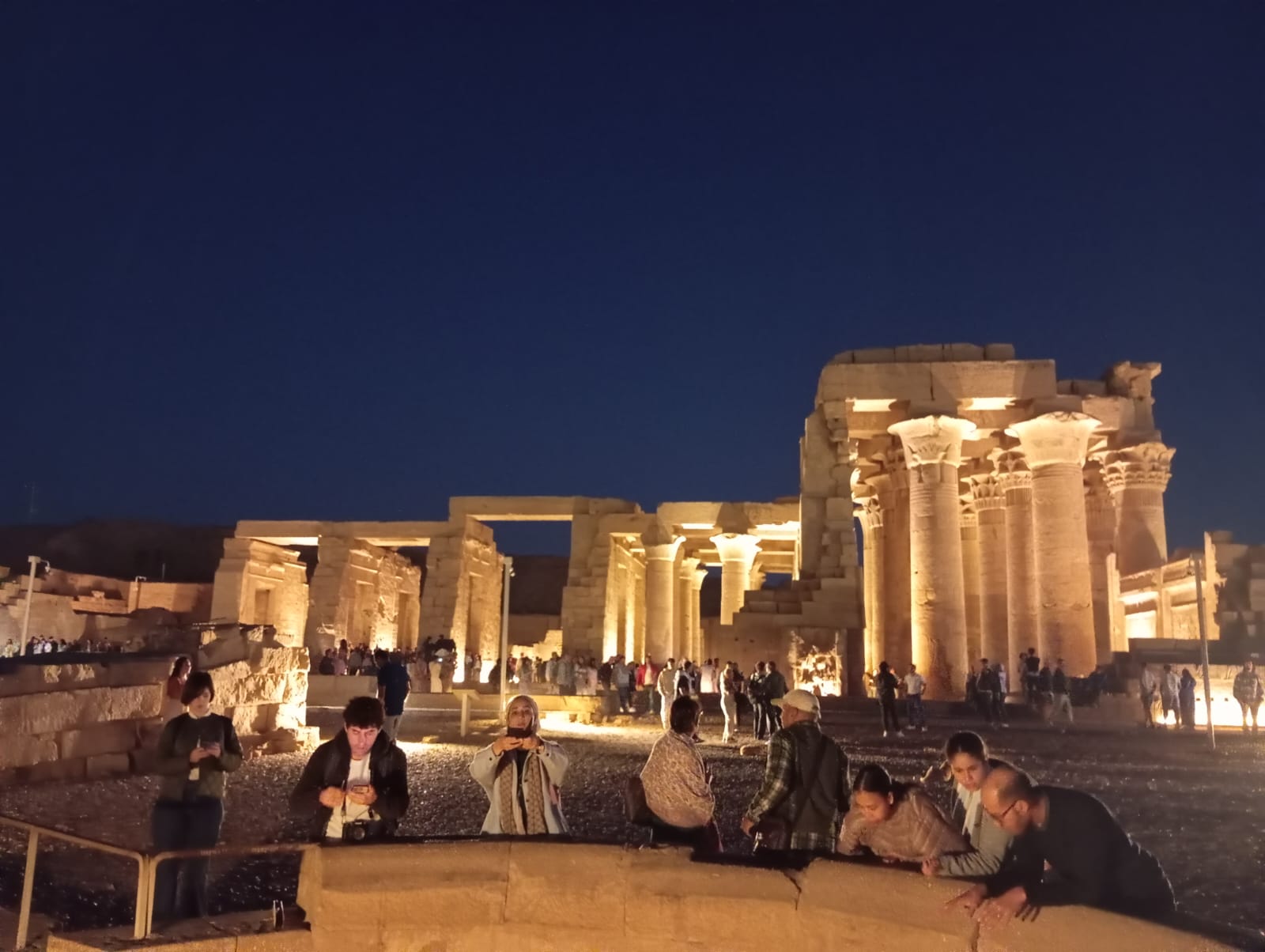
There isn’t just one way to drive change and progress — something showcased in a major way at the Temple of Kom Ombo and the Temple of Edfu. Both are proof of how beneficial it can be to think about things differently.
- By shifting from a singular temple focus to a dual design, the architects of Kom Ombo solved a complex social and spiritual challenge — creating a perfectly symmetrical double temple for two competing gods.
- Highlighting how a shift in your way of thinking can unlock entirely new structures for success.
- We’ll see this again at Edfu in a different but equally powerful way.
- By anchoring the temple to the mythic battleground of Horus and Set, the creators proved what happens when legacy meets legend. What other seemingly impossible results could be achieved if we removed ourselves from “the way we’ve always done it”?
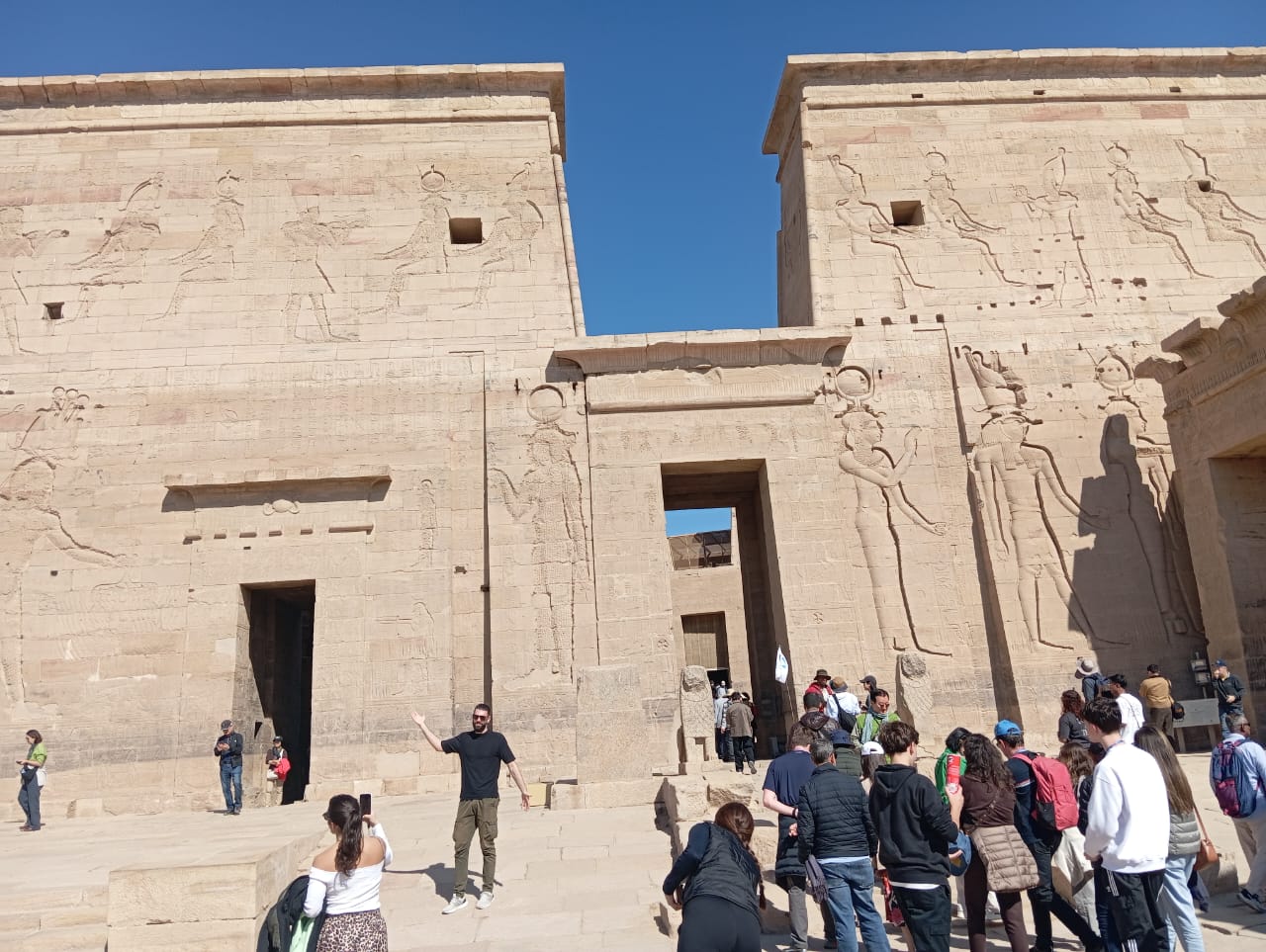
Day 7 – August 2 — Eclipse Day
The timing of our journey aligns with a solar eclipse that mirrors our exploration of ambition and understanding. What does it mean to recognise and seize an opportunity that is truly once-in-a-lifetime? Just as the ancient Egyptians aligned their temples with the stars, we’ll use this alignment to sharpen our own vision.
- This rare convergence of ancient stone and cosmic timing sets the stage for a day of unparalleled insight.
- The entire day is given over to relaxation and the viewing of the full eclipse from the upper deck of the Nile cruiser.
- Luxor is directly in the path of totality, providing an opportunity to witness the extraordinary, grounded in history and illuminated by the stars.
This alignment is an invitation to pause, reflect, and witness a spectacle that remains as awe-inspiring today as it would have been to the architects of the ancient world.

Day 8 – August 3
The temples of Abydos and Dendera stand as eternal testaments to the architectural and spiritual splendour of ancient Egypt, offering a level of preservation that feels almost frozen in time.
Abydos
- One of Egypt’s oldest sacred landscapes. A bridge between earthly and eternal.
- Human connection physically etched into stone. Not metaphor.
- The Osirion: hidden behind the Temple of Seti I. Megalithic. Deep in the earth.
- Rising groundwater mirrors the massive pillars. Several attempts to empty the water have failed. How does it work? A primordial quality no architect could fake.
- No ornateness here. Raw. Heavy. Older than the memory of its own builders.

Dendera
- Dendera is not a temple. It’s a time capsule with a ceiling.
- The Zodiac of Dendera — a circular bas-relief map of the night sky. Every planet, every decan, every star the Egyptians tracked. Now in the Louvre. The original ceiling still bears its phantom shadow.
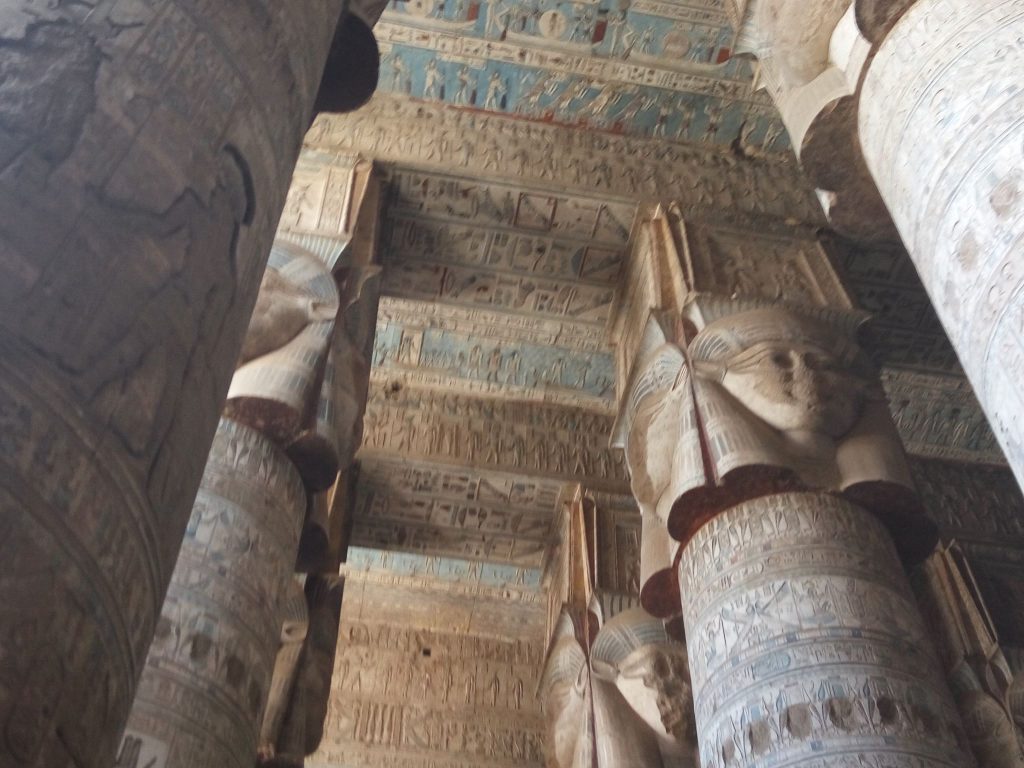
- Hathor’s temple: columns with faces. Crypts carved beneath the floor. A rooftop chapel aligned to the winter solstice.
- The electrical bulb debate (overblown). The real impossibility: how did they carve reliefs on a curved vaulted ceiling 15 metres high — and get the proportions perfect from ground level?
- No scaffolding holes. No correction marks. One continuous, perfect arc of symbol and story.
- Underground crypts: 11 chambers hidden since the Ptolemaic era. Accessed through stone trapdoors. Inside: temple furniture, cult objects, and a resonance no modern museum can replicate.
- Dendera asks: what knowledge did they store underground while showing the sky above? Why did the ancients dedicate such intricate detail to places intended only for the eyes of the gods?
The temples of Abydos and Dendera offer a window into a mindset that transcends the millennia, challenging us to consider the endurance of our own legacies. What does it mean to manifest an idea in stone — or any material — in a way that does the same?
Day 9 – August 4
On the West Bank of Luxor, we’ll encounter the “Houses of Millions of Years” — built with a generational mindset that prioritised eons over decades. As we explore the hidden passageways and sealed shafts of the Valley of the Kings, we’ll consider the nature of a culture that used secrecy as a design parameter to protect a future they would never see.
The West Bank – Luxor
- Known as the Gateway to Eternity.
- The “Houses of Millions of Years” were not tombs. They were machines designed to outlive dynasties.
- A mindset that spans eons, not decades. Century after century of work handed down like a relay.
Valley of the Kings
- The impossibility: carving intricate, painted tombs deep into a mountain. Hidden passageways. False chambers. Sealed shafts.
- All while keeping the location secret. Paranoia as a design parameter.
- They almost succeeded. Almost.
The Egyptians thought beyond geological time. They built connection to a future they would never see, named by names they would never know. What are we building today that outlasts our own era?

Day 10 – August 5
We’ve saved the most comprehensive exploration for the conclusion of our journey — the massive complexes of Karnak and Luxor, where an approach and mindset that can span eons and eras showcases the connection between the human and the divine. The true impossibility lies in a scale of construction that spans generations, revealing an all-encompassing mindset that prioritised a shared eternal vision over any single era or individual structure.
Karnak Temple
- Not a single project but a building programme that lasted over 2,000 years.
- Proof that your way of thinking is the most powerful tool any of us have.
- If these structures could adapt and thrive for 3,400 years, what could we achieve if we embrace a similar mindset?

Karnak — the data
- Construction spanned 1,500 to 2,000 years — from ca. 1971 BCE to 395 AD
- Approximately 30 successive pharaohs added to it
- Total temple complex: over 100 hectares (247 acres) — larger than some ancient Egyptian cities
- Precinct of Amun-Re alone: 30 hectares (74 acres)
- Great Hypostyle Hall: 5,000–5,467 square metres (54,000 sq ft)
- 134 columns in the Hypostyle Hall, arranged in 16 rows
- 122 columns at 10 metres tall
- 12 central columns at 21 metres tall, 3.57 metres in diameter — each can hold 100 people standing on the capital
- Architraves atop the columns: estimated 70 tons each
- Hatshepsut’s obelisk (still standing): 29.56 metres (97 feet) tall, ~323 tons — second tallest in the world
- Quarrying that single obelisk took seven months — recorded in her own inscription
- UNESCO World Heritage site since 1979
The raw engineering data of the Hypostyle Hall speaks for itself, offering a scale and precision that has captivated experts for centuries. These figures and structures stand as a testament to a vision that pushes the limits of physical possibility, inviting everyone on this journey to better understand and cultivate a connection with the eternal.
Luxor Temple

- Showcases an ambition of endurance — repurposed by various civilizations for over 3,000 years
- A definitive blueprint of New Kingdom power, crystallising the peak of Egyptian architectural and political expansion
- The stone-carved manifestation of the Pharaoh’s divine mandate, translating abstract theology into undeniable physical presence
- By forging a unified sacred landscape, the complex synchronised two distinct sites into a singular, massive engine of state ritual
- At 213 feet across, the complex is roughly the width of a modern football field
- Each obelisk weighs approximately 230 tons — at nearly 80 feet tall, nearly the height of an 8-storey building
- Stretching nearly 2 miles, the Avenue of the Sphinxes turned the entire city into one continuous sacred monument
- The soaring columns, crowned with open papyrus capitals, were engineered to transform the temple floor into a mythological “Island of Creation,” emerging from the primordial waters
Day 11 – August 6
On our last day together, we’ll connect the dots of our journey, equipping you with the tools to build a lasting legacy of your own. You’ll enjoy a free afternoon in Cairo to reflect and immerse yourself in the city’s vibrant energy. Whether you’re transferring to the airport or choosing to add extra nights and custom tours, you’ll leave with a head start on a new way of thinking and a blueprint for your future.
Today we build taller and with more advanced materials, but do we still build with that same raw, monolithic, millennia-spanning ambition? What does it mean to bring that way of thinking into your own life? Take part in a journey that forces you to confront these questions in order to fundamentally shift your perspective for the better.
Full logistics regarding accommodation, flights, transfers, and what’s included are on the same page as the VIP Totality Luxor 2027 tour.
Email Mara directly to ask any questions and confirm availability: maraegypt@gmail.com
About Jeremiah Karpowicz
As an author, sculptor, and B2B event organiser, Jeremiah Karpowicz brings nearly twenty years of experience to the professional communities he serves. Whether producing sessions, podcasts, or articles, his work is driven by a philosophy first sparked during a journey to Egypt — one that highlights how your individual mindset is the ultimate architect of your eventual impact.
Learn more via his website or LinkedIn.
Back to All Offers for 2027 Luxor Eclipse tours
All offers are subject to availability, terms & conditions, E & OE