
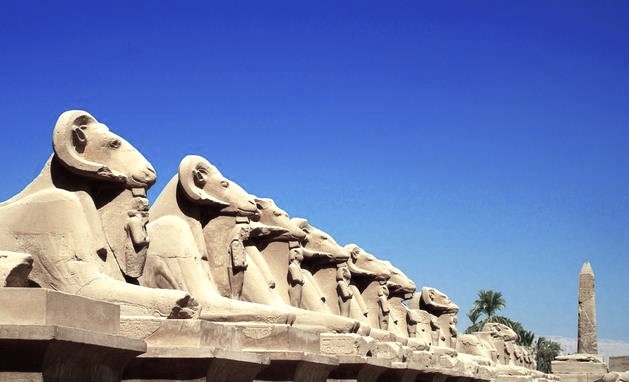
Karnak isn’t impressive because it’s big.
It’s impressive because it was alive — politically, spiritually, ritually — for over 2,000 years.
Most visits rush you through statistics: largest temple complex, tallest columns, longest timeline.
But Karnak was never designed to be “seen” in that way. It was designed to be entered, moved through, and experienced in sequence.
What gets missed is how it actually worked — how power moved through it, how ritual shaped it, and why certain spaces still feel charged the moment you step inside.
That’s the Karnak I know.
Your Visit to Karnak
This is not a rushed group march. It is:
- Led by a high-level Egyptologist, chosen for clarity, not theatrics
- A measured pace — time for questions, photos, and silence where it matters
- Planned for early morning or late afternoon when the light reveals reliefs properly and crowds thin
- Designed to fit naturally into a Luxor stay, not exhaust you before noon
- Included transport, driver, guide, entry fees and any necessary permits
Key Highlights
- Size: Over 200 acres, the largest religious complex in Egypt
- Construction Period: Over 2,000 years, from the Middle Kingdom through the Ptolemaic period
- Hypostyle Hall: 134 columns, 21 metres tall at the centre
- Open-Air Museum: Includes reconstructed chapels, such as Amenhotep I’s alabaster chapel
- Sacred Lake: Ritual purification site for priests
- Sekhmet Statues: Black granite statues representing protection and divine energy
- Holy of Holies: Enclosed shrine that housed the statue of Amun-Ra
Karnak Temple is not only an archaeological marvel but also a chronicle of ancient Egyptian civilisation. Each column, statue, and sanctuary tells a story of rulers, artisans, and worshippers spanning more than two millennia.
Booking Your Karnak Temple Visit
Every booking is handled personally by me. Tell me your dates, how many in your group, ages of any children, and anything else I should know. I want you to experience Egypt and not just get you to push the “book now” button, so I’ll come back to you before anything is confirmed.
I can book a private visit for you to the Sekhmet Chapel for one hour if you wish or I can add you to my calendar to possible join a small group – have 15 minutes alone with Sekhmet and share the cost of the private visit.
📩 To book, contact me directly at: maraegypt@gmail.com