
Today I walked into Esna Temple with my grandson.
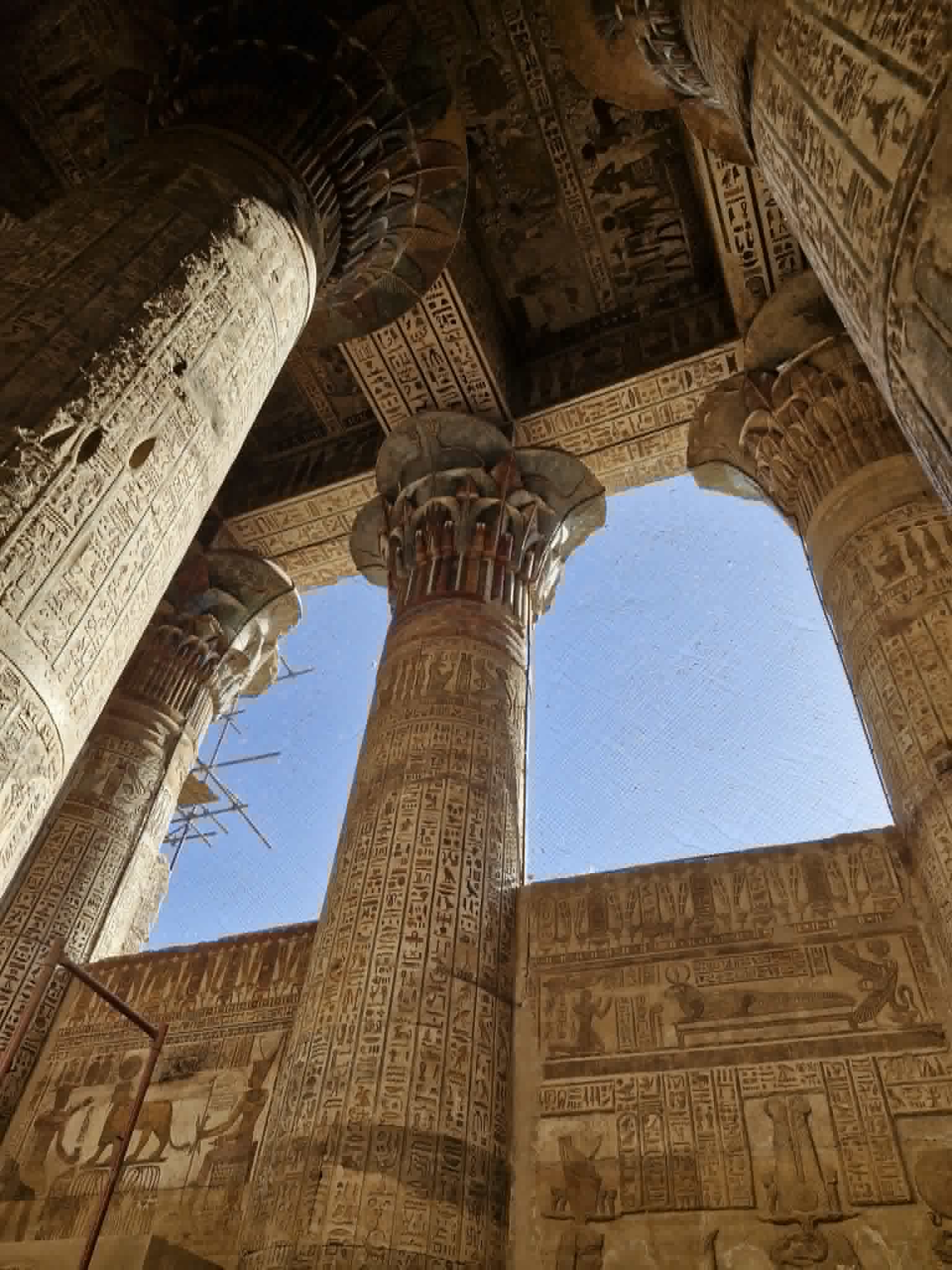
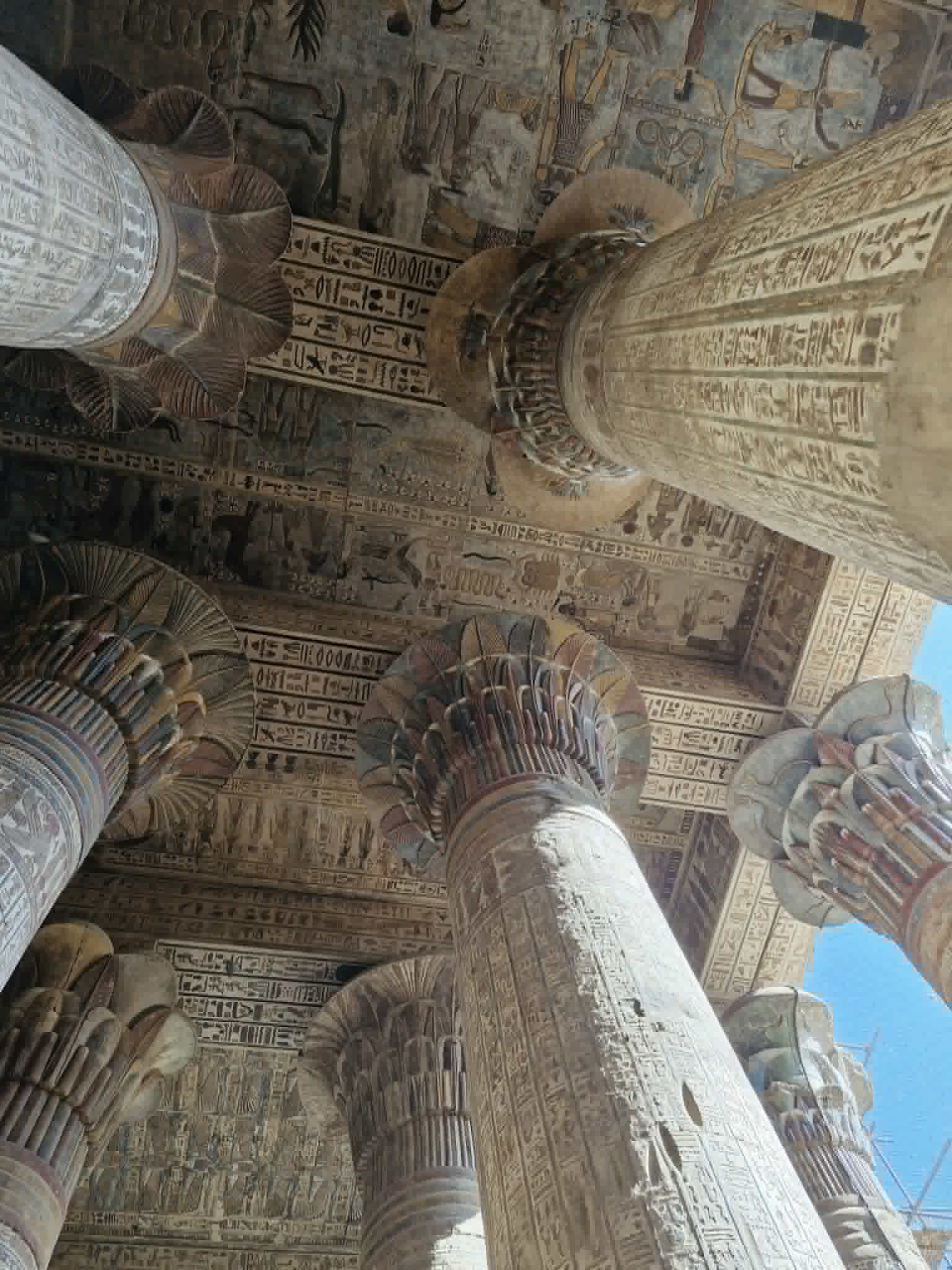
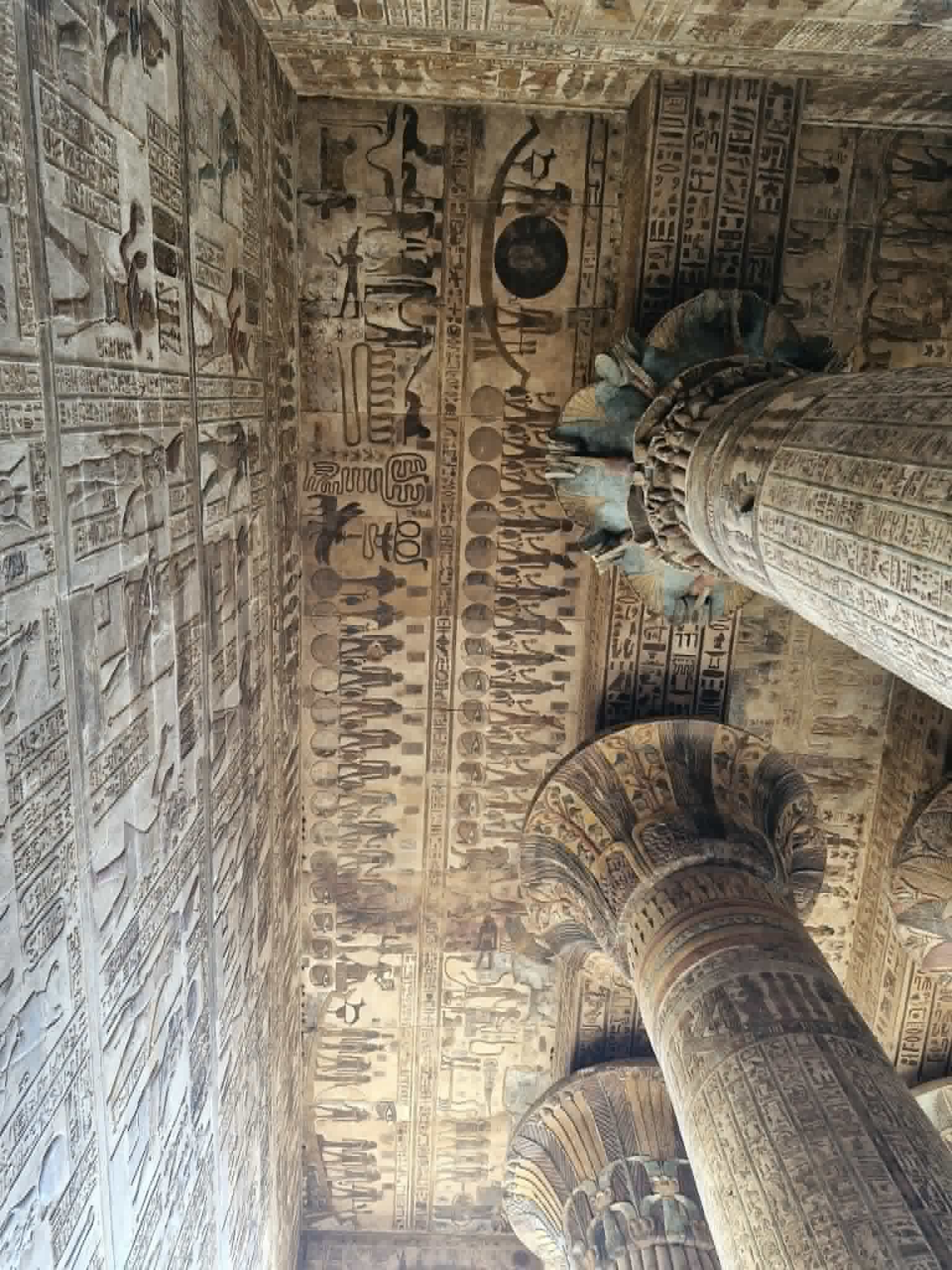
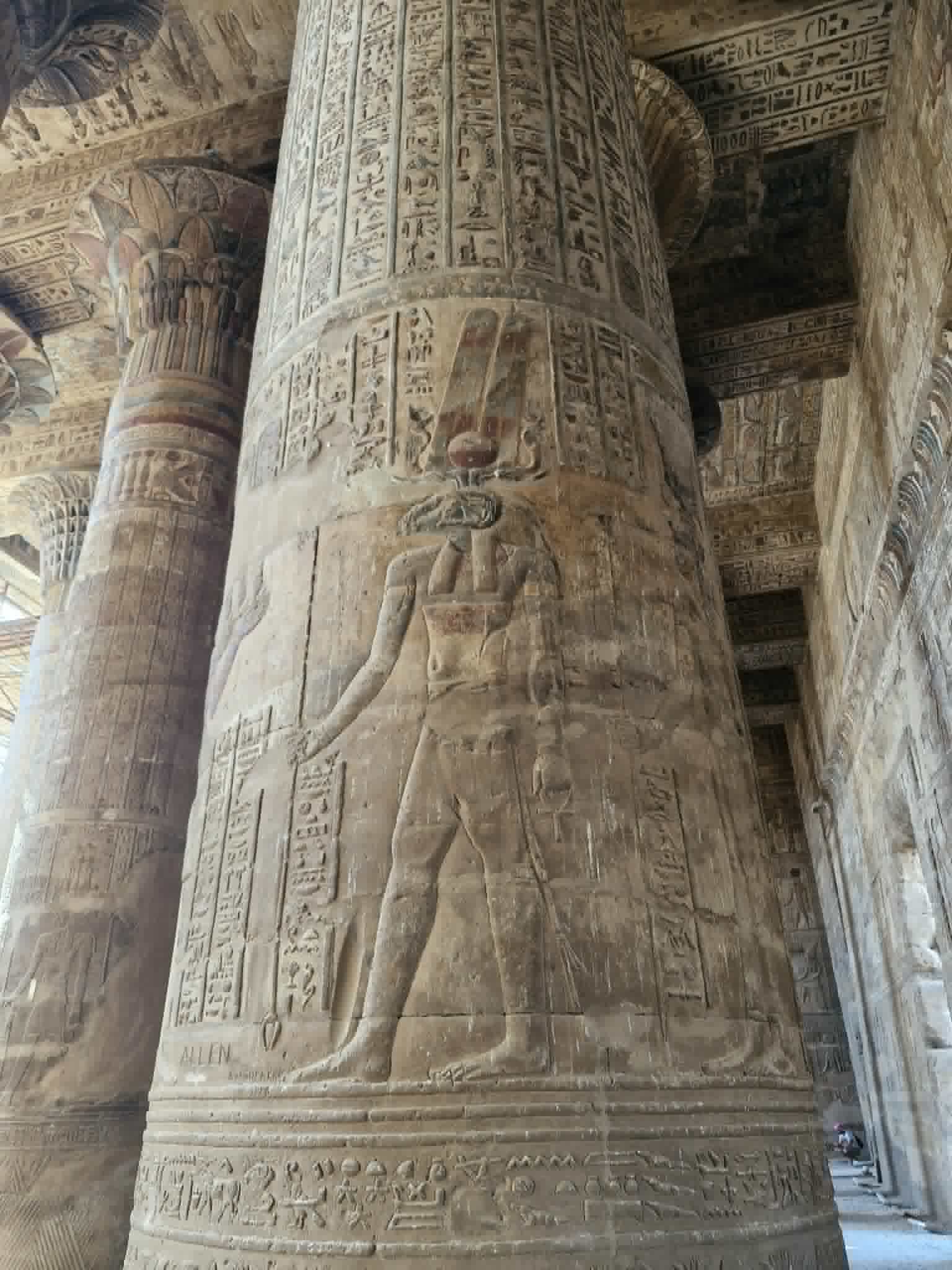
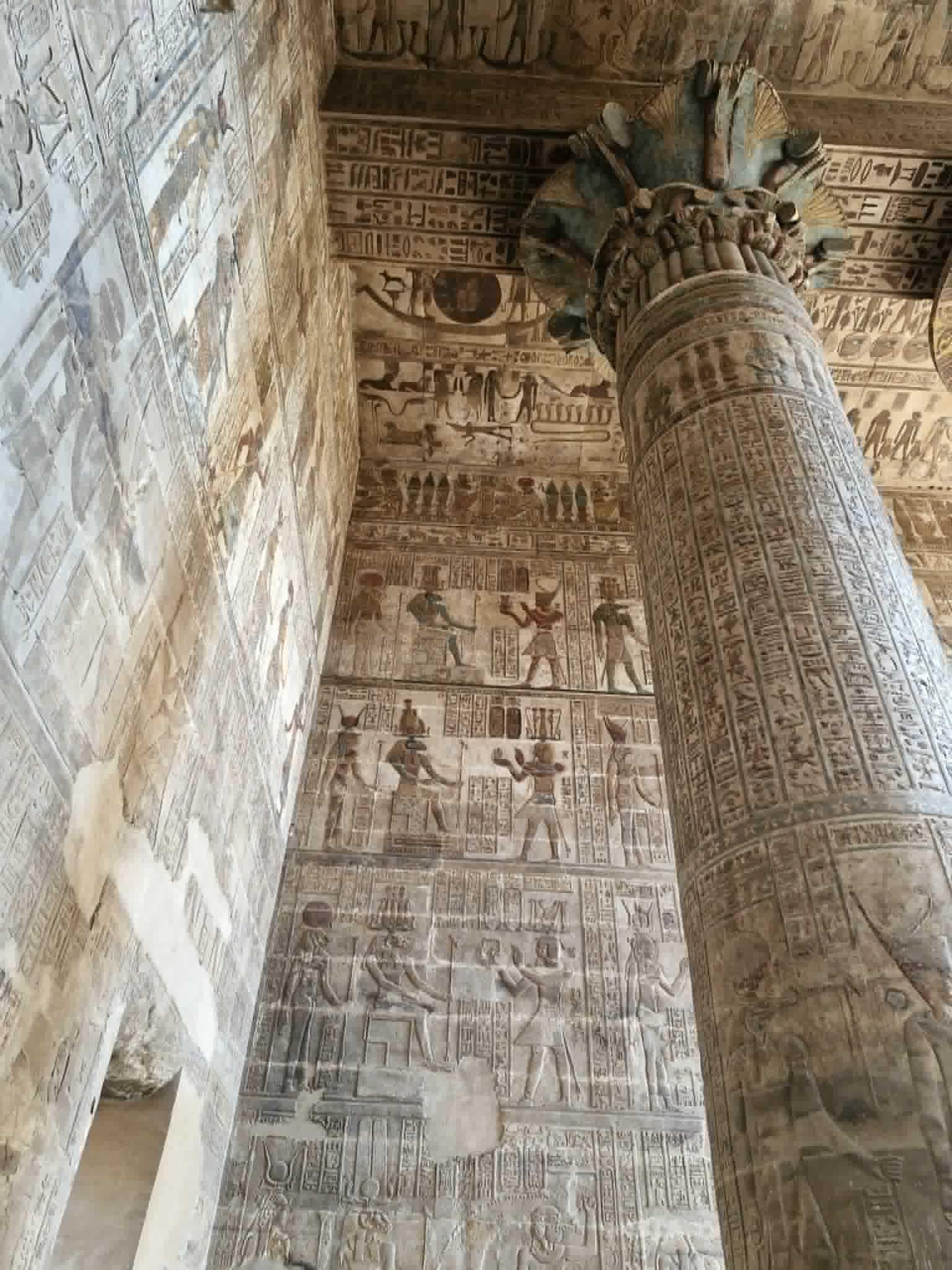
The colours caught my attention immediately. Photographs had not prepared me for them. The blues were deeper, the reds richer, and the yellows – gold where the light hit them – still seemed to hold sunlight despite the passing centuries. Above us stretched a ceiling alive with gods, stars, constellations and sacred symbols that had once been hidden beneath almost two thousand years of soot.
I had come searching for something.
This is normal for me. I am always searching for something. Not necessarily answers. Sometimes only a feeling. A thread. A question.
People often imagine that places like Esna deliver immediate revelations – that you walk into an ancient temple and feel a surge of energy run through your body, that forgotten memories awaken, that the stones begin to speak.
For me it rarely works like that. Usually nothing happens. Might be something to do with delayed processing. I take photographs. I go home. Life goes on. Then later – sometimes days later, sometimes months, as happened to me on my first visit to the King’s Chamber at Giza – something begins to stir.
Today, standing inside Esna Temple, nothing stirred at all.
If I am honest, I found myself more fascinated by the 18th-century Ottoman-era caravanserai I visited afterwards than by the temple itself. Esna felt almost too perfect. The extraordinary cleaning and restoration work has revealed colours unseen for centuries, but perhaps that very success has made the temple feel strangely sanitised. Beautiful. Impressive. Yet somehow distant.
And yet one question followed me home.
Who walked here?
Not tourists. Not archaeologists. Not emperors. The people who belonged here – whose footsteps echoed beneath these painted ceilings long before the soot accumulated, and long before anyone thought to remove it.
Were they priests? Priestesses? Perhaps both, depending on which version of the story one chooses to remember.
The thought stayed with me all morning. By evening I found myself wanting to return alone – simply to sit quietly and listen.
And as often happens, a story began to form. Not because I decided to write one. Because a question had started asking itself.
What follows is not history. It is the shape a question took when I let it wander.
The soot came away beneath her fingers in flakes as dark as the void before creation.
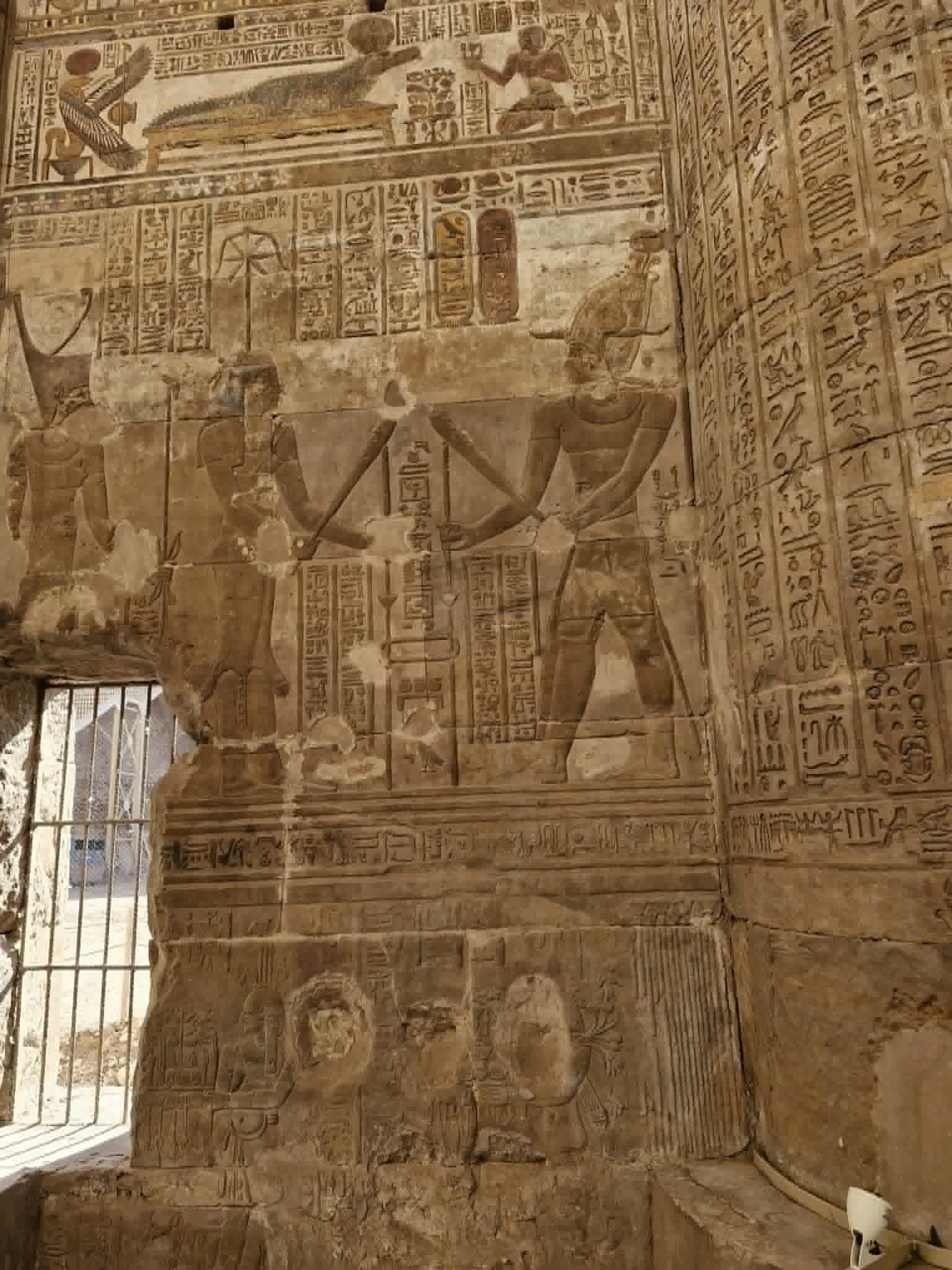
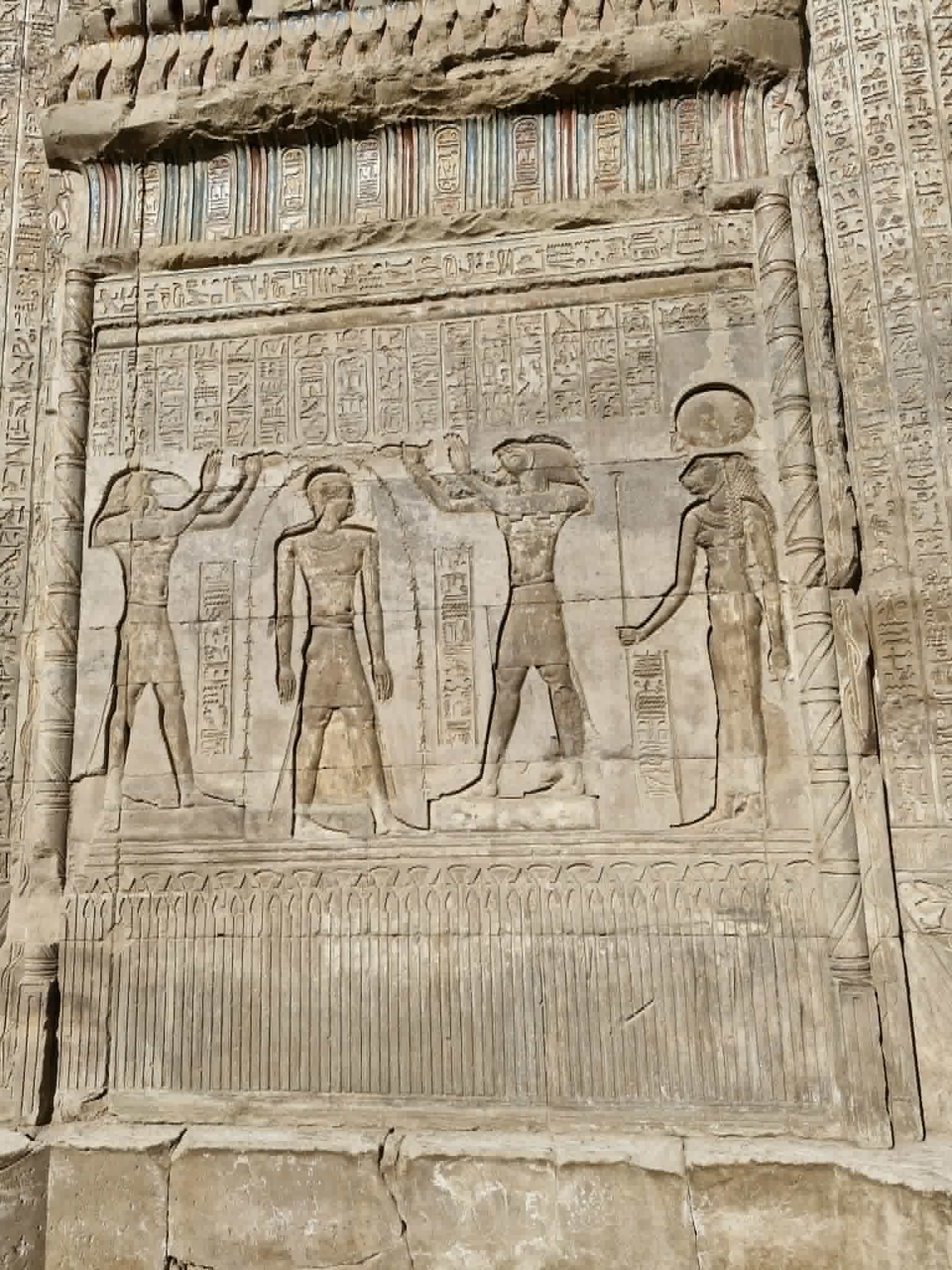
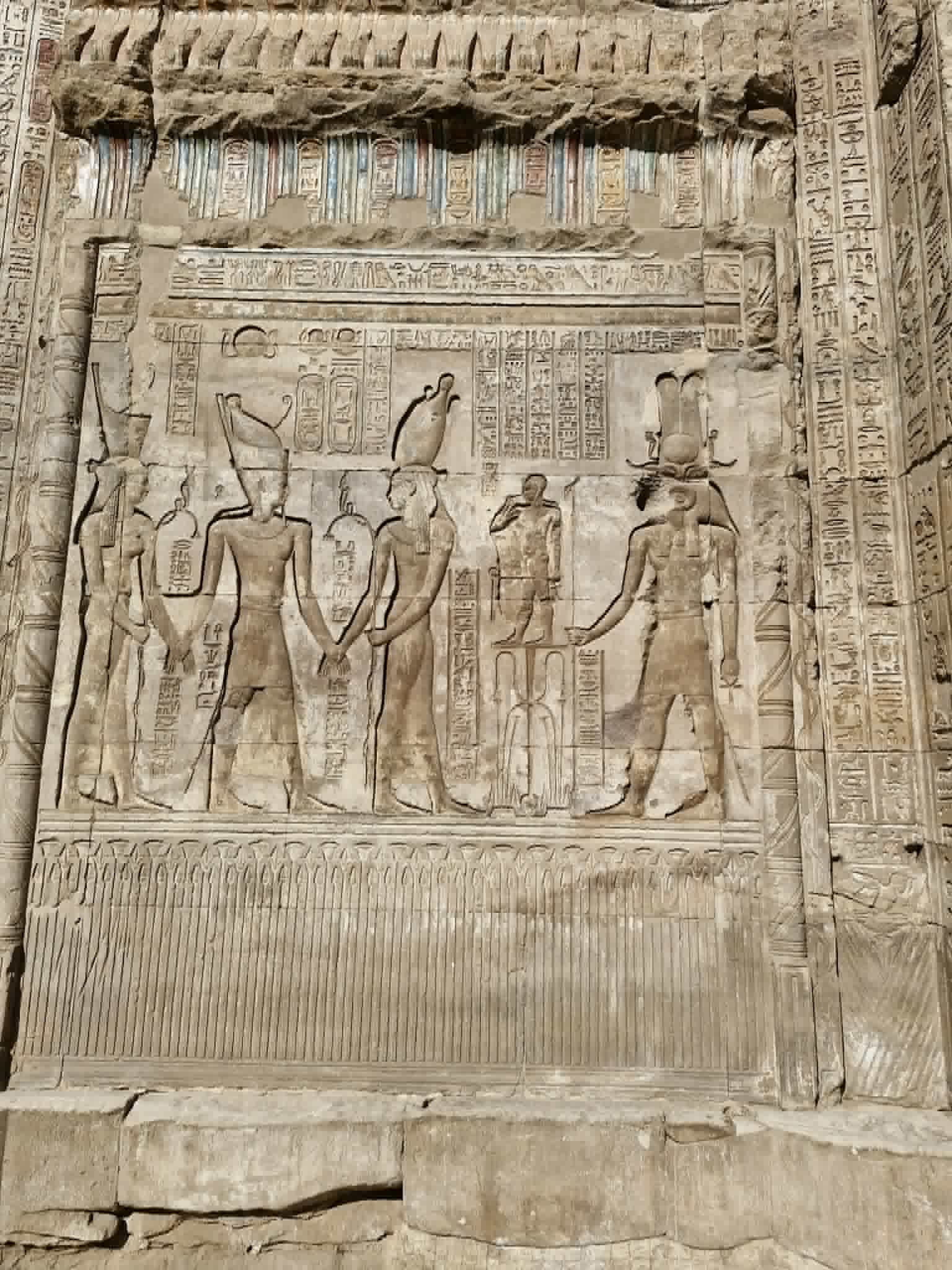
She stood near the southern wall, where Emperor Trajan once offered incense to Khnum, Lord of Esna, Creator upon the Potter’s Wheel. The carved hieroglyphs pressed gently into her skin as she leaned her palm against the stone.
Nothing happened.
She closed her eyes and tried again, reciting the old words her grandmother had taught her.
Nothing.
A laugh almost escaped her. Of course nothing happened. What had she expected?
For years her grandmother had filled her head with stories – of hidden chambers beneath the temple, of forgotten heka, of questions buried so deeply within the stones that only the worthy could hear them. As a child she had believed every word. As a young woman she had begun to doubt. Now, standing alone inside Esna Temple, she was no longer sure which frightened her more: that the stories might be true, or that they might not.
She had waited a long time for this moment. If the floor remained only a floor, if no chamber existed, if the priests laughed at her – then her grandmother would die not as a keeper of forgotten wisdom, but as a stubborn old woman who had spent her life chasing ghosts.
The thought hurt far more than she wanted to admit. She wanted the stories to be true – not because she craved magic, but because she loved her grandmother. Because she wanted the old woman who refused to bow before Roman officials to have been right.
Footsteps echoed behind her.
“You are not pure.”
The voice came from the darkness between the columns. A priest stepped forward, his head shaved, a leopard skin draped over one shoulder. In his hands he carried a small ceremonial potter’s wheel – the symbol of Khnum himself.
“I have fasted for eight days,” she replied. “I have washed with natron. I have worn linen. I have followed every instruction.”
“You are a woman.”
The words landed heavily.
“The Lady Neith may walk beside Khnum, but women do not enter the inner mysteries.”
Anger flared immediately – not fear, anger. She was tired of doors closed by men. Tired of being told where she belonged. Tired of watching knowledge guarded by those who seemed increasingly unable to understand it themselves.
Without thinking, she reached inside her tunic and drew out the amulet. A small disk of lapis lazuli, smooth from decades of touch, carved with the image of Neith holding her shuttle.
The priest froze. For a long moment neither spoke. Then something shifted in his expression – not reverence. Recognition.
“That belonged to Senebtisi.”
Her breath caught. No one spoke that name anymore. No one.
“She was my grandmother.”
The priest closed his eyes. When he opened them again, the hardness had gone.
“I was twelve years old when I met her,” he said quietly. “I could not remember the Morning Chant. I was certain I would be in trouble for my failure. She found me crying beside a column and placed my hand upon the stone.” His gaze drifted toward the wall. “She taught me words hidden beneath the words. Meanings hidden beneath meanings.”
The young woman felt tears threatening. The old woman had mattered – not only to her, but to others.
“Before she left,” the priest continued, “she told me that one day a woman would come carrying that amulet. She told me I would know her when I saw her.” He studied her face. “You have her eyes.”
For the first time since entering the temple, the young woman felt doubt loosening its grip. Not disappearing – only shifting. Because if her grandmother had been right about this, what else might she have been right about?
The Chamber
The chamber, when they finally opened it, was disappointing. At least at first.
There were no treasures. No golden statues. No secret books. Only a black basalt potter’s wheel and a clay tablet resting beside it.
The young woman knelt and read. The inscription contained no spell, no revelation. Only a question.
Who shapes the shaper?
Who molds the molder?
Who gives form to the one who gives form to all?
She read the words again. Then again. Slowly, understanding began to dawn. The chamber was not hiding answers. It was preserving a question – one so important that generations had protected it.
She thought of Khnum shaping humanity upon his wheel. Of Neith weaving destinies. Of Heka, the force that existed before the gods themselves. Then she understood something else: the temple itself was asking the question. Every column. Every relief. Every inscription. A conversation stretching across centuries. Not a monument. A dialogue.
When she emerged into the great hall once more, she looked up. For a few brief moments all around her the temple looked different.
The ceiling was black. The stars were gone – buried beneath layers of soot not yet accumulated in her own lifetime, but somehow already present in the vision unfolding within her thoughts. She could almost see them beneath the darkness. Waiting.
Hidden was not the same thing as lost. Forgotten was not the same thing as gone. Some things simply waited until people were ready to see them again.
The priest stood beside her.
“Will anyone ever uncover them?” she asked. “The stars?”
He followed her gaze. “Perhaps.”
“When?”
The old priest smiled. “In a thousand years. Perhaps two.”
She laughed softly. The idea seemed absurd. Yet somehow comforting – as though the temple itself possessed a patience beyond human understanding.
The story should end there. Perhaps it did.
Yet when I sat looking through the photographs from my visit to Esna, another image appeared. Not in the camera. In my mind.
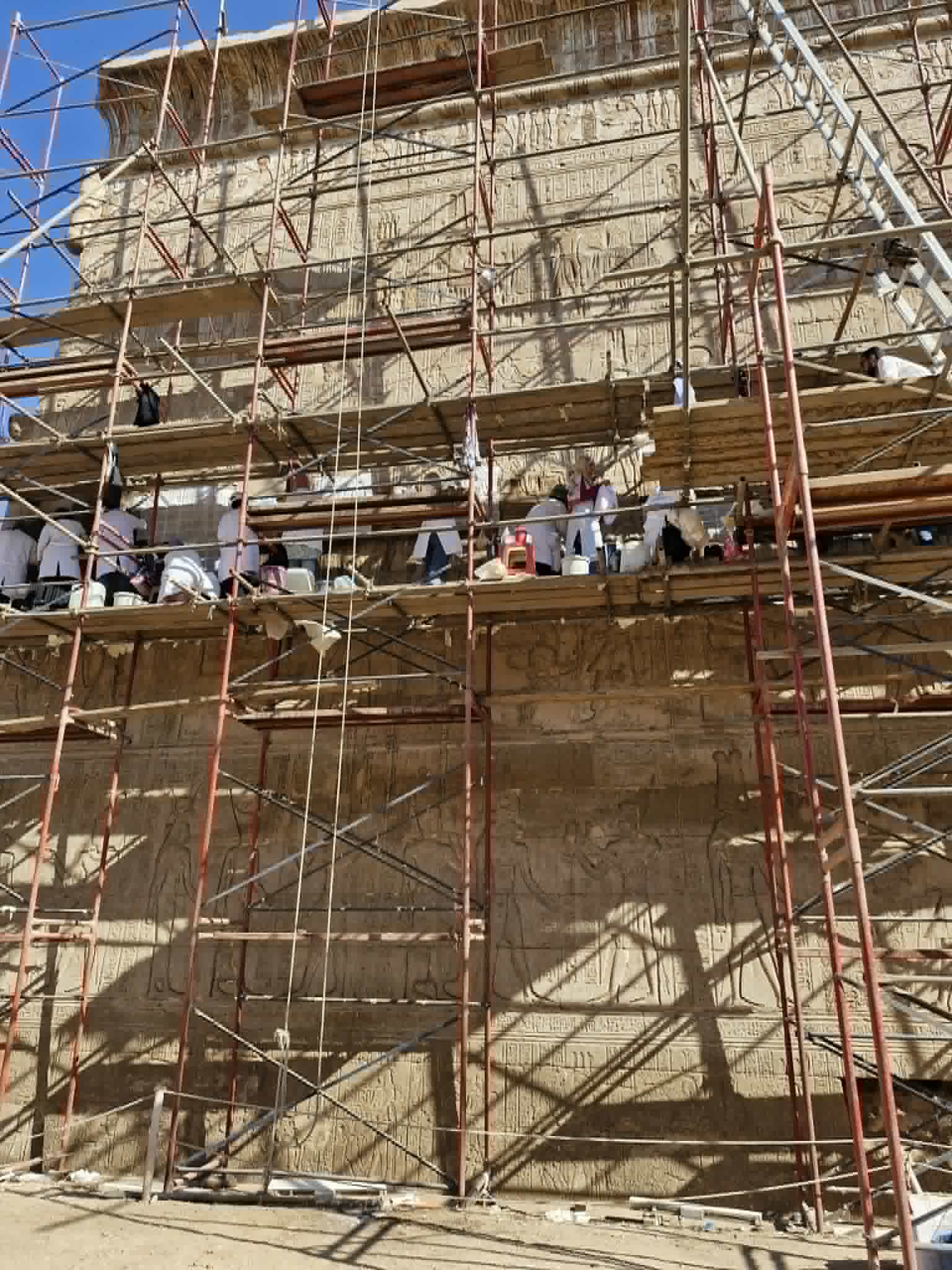
And suddenly I found myself thinking about the restoration team I had seen in the morning, working away on the outer wall of the temple, under the hot June sun, who really had spent years cleaning those ceilings. Toothpick by toothpick. Cotton swab by cotton swab. Removing nearly two thousand years of soot. Returning the stars to the temple.
I imagined one of them standing alone in the hypostyle hall after the day’s work was done. The tourists gone. The voices silent. Only the columns remaining. Only the stars.
Perhaps he notices movement between the columns. A woman. White. Blue. Gold. Gone before he can properly focus.
Perhaps he follows – not because he believes what he saw, but because curiosity compels him. He reaches the southern wall. The same place. The same corner. The same stones.
And suddenly he stumbles. Not enough to fall – just enough to lose his balance. His body drops instinctively onto one knee. One hand against the floor. One hand touching the stone.
And for a fraction of a second, something flashes through his mind. A blue amulet. A woman’s hand. The sensation of waiting. Not a vision. Not a memory. Recognition – the kind that arrives before thought, the kind that leaves no explanation behind.
He stands again, slightly embarrassed, glancing around to see whether anyone witnessed his awkward moment. No one has. The temple is empty. Yet the feeling lingers.
Where had he seen that amulet before? A book? A photograph? A museum display? He cannot place it.
Eventually he leaves. The question follows him home.
Just as my own question followed me home.
Ancestral Memory
And perhaps that is where the story truly begins. Because I cannot help wondering whether places remember us as much as we remember them.
Modern science increasingly speaks of memory carried through generations – traces of experience passed through bloodlines in ways we do not yet fully understand. But blood may not be the only thing that creates inheritance. There are other lineages. Teachers and students. Keepers and seekers. People separated by centuries who nevertheless continue the work of those who came before.
Perhaps memory sometimes sleeps within places. Perhaps posture matters. Perhaps standing where someone once stood, kneeling where someone once knelt, touching the same stone they touched, can occasionally stir something ancient within us.
Or perhaps it is only imagination. I honestly do not know.
What I do know is this. Esna is one of the quietest temples in Egypt. Most days there are only a handful of visitors. The guardians there are less intrusive. You can sit in peace and look up at the stars that waited almost two thousand years to be seen again.
And you can ask yourself a simple question.
Why did you come?
Because no one travels to ancient places by accident. Something called you there. Curiosity. Wonder. Memory. A question.
Close your eyes and listen. You may not receive an answer. The people of ancient Egypt understood that answers are rarely the important thing.
Questions are what keep us searching.
I would definitely recommend adding Esna Temple and the Caravanserai to your Luxor to Aswan Trip Itinerary if you are traveling overland by car.
Last updated on 06/08/2026 by Marie Vaughan